This is the story of my career
from when I left art school.
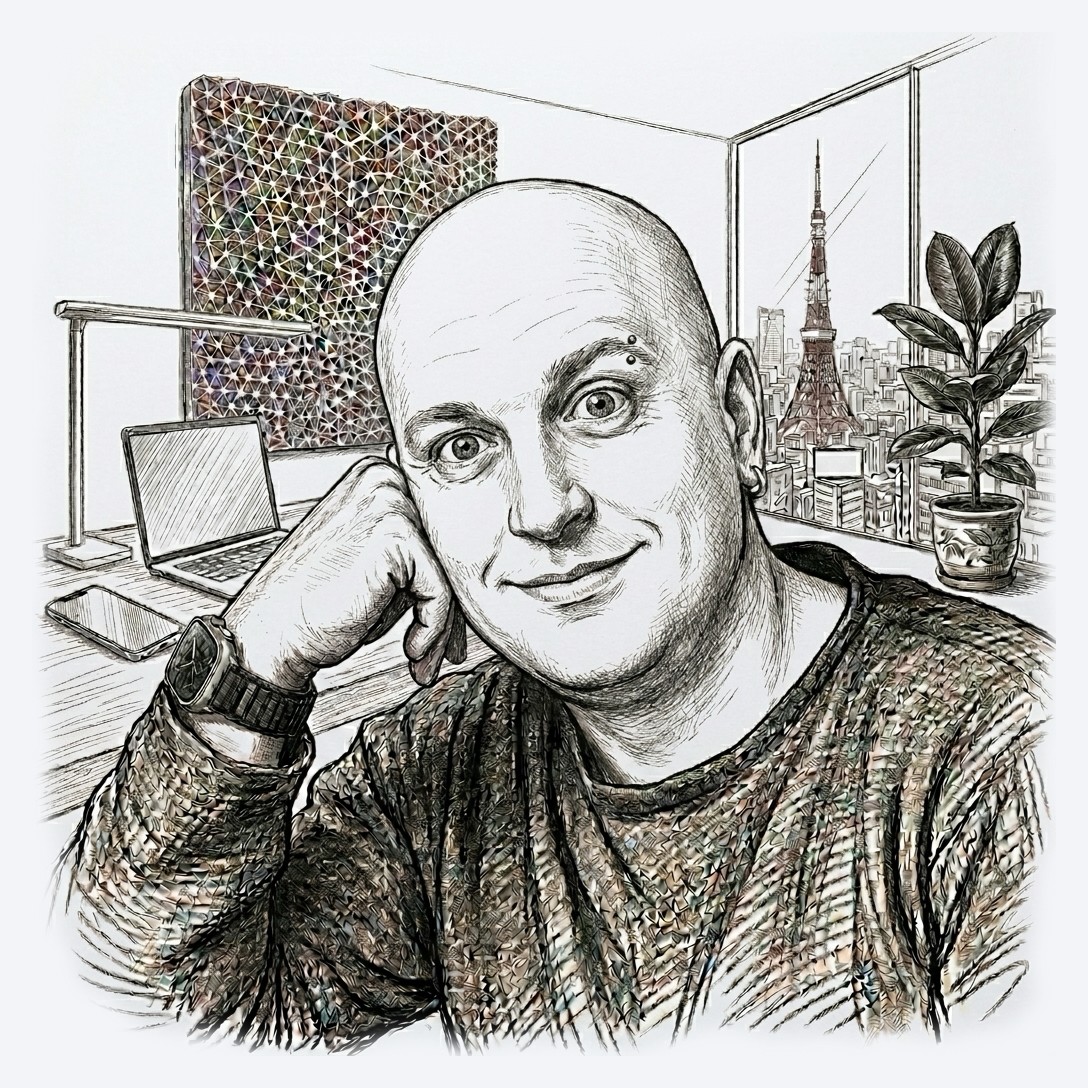
In 2004, I graduated with a BFA from PNCA, an art college in Portland Oregon, double-majoring in painting and sculpture. What I came out the other side with was a load of student loans, no plan, and one rule I picked up somewhere along the way: follow your excitement.
"Follow your excitement."
For me, that meant going back to New York. I'd done a semester in the NY Studio Program the year before, and a bunch of us from that cohort were squatting at the Tribeca studios for the summer before the new semester started. The studio manager thought it was romantic — broke art kids living in the studios making art when they should find a job — and let us stay.
Thankfully, a friend’s brother was able to get a job for me at a sign company on Canal Street. There I learned just about every single job at a sign company. I started by utilizing my painting skills creating specialty hand painted signs. For instance, utilizing techniques to make the paint look really old and cracking. I got to use wild machines like a water-jet CNC machine to cut through granite, paired with 1 inch laser cut acrylic to install a sign embedded into the sidewalk to be lit up from below. I fell in love with the machines themself, and linear motion, the way a digital design could become a physical object. I did the hard work too. I worked in the warehouses in New Jersey welding awnings and driving the trucks, sometimes ones with cranes to install signs and awnings all across New York.
"The way a digital design could become a physical object."
Somewhere in all of this, I met my love. We traveled to Japan to meet her family, where we got married, before returning to NYC and moving to Brooklyn. It’s kinda funny, I got married, and for some reason, all the credit card companies wanted to give me large lines of credit...
I bought a large laser cutter on credit for $12,000, a week before we found out my wife was pregnant. We were nervous about having a kid in New York without family around, and I had family in Texas, so we moved to Dallas. I worked for another sign company there, doing the graphic design alongside everything else, and ran a 'Laser Art Factory' side business from the garage. My son was born, and it changed everything — suddenly being a real provider mattered more than anything. And about the same time, I noticed I was enjoying making websites for the sign company and my own business more than the production work itself.
So, I quit my job. I decided I would learn to make great websites and learn Flash development in addition to standard web dev. The language was AS3 at that time, and the reason I chose it was more to do with how it was based on vector artwork, very similar to designs I had been creating at the sign companies and with my laser engraver. After three months we packed up and moved to the San Francisco Bay, where my sister had already moved to. I owe a lot to her from helping me to leave Texas.
I found a job as a creative technologist at an interactive digital ad agency in SF, called EVB. We would create some of the most epic interactive media campaigns, and websites. They were always fun and creative. It was full stack (LAMP mostly) back then supporting either standards or Flash websites. Then the iOS SDK dropped in 2008 and I was all in from the beginning, learning native development. And because I was into creative code and visuals, I started to specialize, by learning OpenGL for the iPhone.
"The maker thing kept showing up, even in pure software jobs."
I learned how to ship under deadlines, work alongside designers and copywriters and producers, and translate creative briefs into things that actually worked. I shipped an app for Juicy Fruit, “Sweet Talk” that had millions of downloads. I helped win a million-dollar pitch by building a physical prototype. What was it? I harnessed my experience of the laser cutter I used to have, took a black piece of cardstock into the office printer, printed Black on black, and scored the folding lines to create a box that we would mail 5 Gum React samples to customers as part of the campaign. Another agency would have had that deal, but my ingenuity was impressive enough to force a partnership. The maker thing kept showing up, even in pure software jobs.
The next decade looked like a series of progressively deeper engineering roles, with the through-line being that I kept ending up at the intersection of design and engineering rather than fully on either side. I joined StumbleUpon to modernize their iOS practice, then Hey Inc. as a product generalist where we built Heyday — an auto-autobiography iOS app that turned your phone's photos into a nostalgic visual memoir, automatically. It became an App Store Editor's Choice in 2013 and was recognized among the Best of 2014. I built the OpenGL image processing pipeline, reverse-engineered Instagram's LUX effect with a hybrid CPU/GPU implementation of CLAHE, and learned more about product thinking from CEO Siqi Chen than from any formal training I've had. Also learned about tough startup decisions and the art of the pivot, doing so twice with some memorable apps before we finally ran out of money.
Hey was acquired by Postmates, and I joined briefly to help the deal close for the team before moving on. I moved to One Inc., where I got to do something I'd been wanting to do for years: serious R&D and on-device machine learning on Apple hardware. This was before CoreML existed. I ported a face-tracking framework from DLib C++ to Metal for real-time computer vision, ported Yahoo's NSFW ResNet to iOS GPU with quantization, and ran experiments with Metal Performance Shaders shortly before being “Sherlocked” by Apple with the first release of CoreML. From there I went to Polarr as Staff Application Engineer, managing and mentoring two iOS engineers on the 24FPS video editing app, re-architecting the codebase, and converting internally trained models to CoreML.
By early 2020 I had nearly a decade of progressively more senior iOS and creative-tech roles behind me, and I was ready for something with more scale. And then, in the middle of the pandemic, a recruiter from Snap gave me the opportunity.
“a role where you have to be able to both dream and realize.”
I started on the Spotlight feed team. Shortly after, I did a design engineering rotation focused on the Stories reply tray UX. I never knew I could find a design-engineering hybrid role. I was all in. After the rotation I moved to the Stories team where I contributed to Shared Stories and other features. I very soon got the offer to join the design engineering team full-time. This was a switch from the Engineering organization to the Design org. For about two years I prototyped features across the app, working at the intersection of designers, engineers, and product. It was the closest thing I'd found to what I always wanted: a role where you have to be able to both dream and realize. And, the team and company let my family move to Japan where we now call home.Then Stable Diffusion appeared, and the rest of the story wrote itself.
For the past three years at Snap I've been deep in applied generative AI as part of my primary role as a design engineer — contributing to early R&D on image diffusion and LLM chat experiences, integrating ChatGPT and generative models into snapchat features. At the very beginning of it all I created a version of Image Preview in snapchat where the user could edit photos with Stable Diffusion for CoreML performing techniques like In-Painting and Out-Painting on photos.
I closely follow the open source AI community and from there I brought many useful techniques to the foreground for our ML researchers at Snap to integrate. I championed ComfyUI as Snap's internal AI platform used across R&D and production. Many teams used the ComfyUI environments I maintained and built tools for, for tasks ranging from model discovery and R&D, creative work, especially for the Bitmoji team, and even large features like Easy Lens were first built in part with our ComfyUI tools. I performed significant ML research for image based model safety. I fine-tuned diffusion models on proprietary data and shipped generative AI prototypes on web and mobile. I pitched to the CEO, other executives, and design stakeholders, mentored other engineers and design engineers, and got to operate at the boundary between research and product.
My favorite project was the suite of AI assisted video production tools, including a cross platform video timeline clip editor, persistent characters with synchronized voice and likeness, and AI agent storyboarding. Most recently I created an epic system for agent-assisted iOS app creation, where you can build an app from a chat UX on your phone, tap a button to download the build and test it out, all while eating lunch.
In May 2026, I was caught up in Snap's 10% workforce reduction and the closure of the Tokyo office where I'd been working remotely for four years. My family is in Tokyo. We're building a house here. So I'm looking for what's next, with a clear sense of what I want it to be.
“I'm looking for somewhere generative AI is the center of the work, not a feature to bolt on.”
What I'm hoping for now is a role at a company that takes craft seriously, ideally where AI is the central business rather than a feature, and where I get to keep doing what I've spent my whole career converging on — building the tools that help people make things, and shipping them in a way that respects both the technology and the humans using it.
If that sounds like your team, I'd love to hear from you.
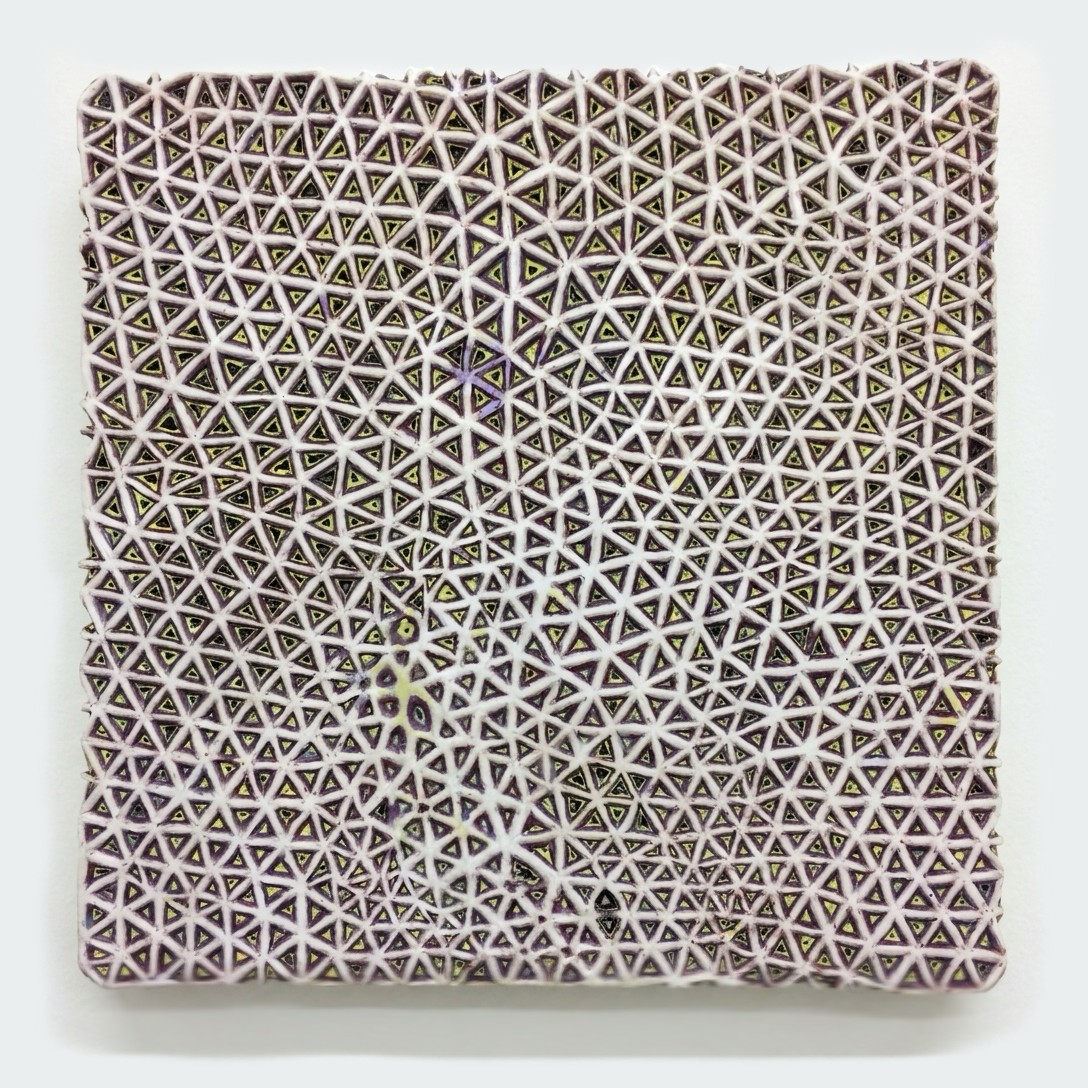
Encaustic Painting
(Fused Pigmented Wax)
This is the story of my career
from when I left art school.
In 2004, I graduated with a BFA from PNCA, an art college in Portland Oregon, double-majoring in painting and sculpture. What I came out the other side with was a load of student loans, no plan, and one rule I picked up somewhere along the way: follow your excitement.
"Follow your excitement."
For me, that meant going back to New York. I'd done a semester in the NY Studio Program the year before, and a bunch of us from that cohort were squatting at the Tribeca studios for the summer before the new semester started. The studio manager thought it was romantic — broke art kids living in the studios making art when they should find a job — and let us stay.
Thankfully, a friend’s brother was able to get a job for me at a sign company on Canal Street. There I learned just about every single job at a sign company. I started by utilizing my painting skills creating specialty hand painted signs. For instance, utilizing techniques to make the paint look really old and cracking. I got to use wild machines like a water-jet CNC machine to cut through granite, paired with 1 inch laser cut acrylic to install a sign embedded into the sidewalk to be lit up from below. I fell in love with the machines themself, and linear motion, the way a digital design could become a physical object. I did the hard work too. I worked in the warehouses in New Jersey welding awnings and driving the trucks, sometimes ones with cranes to install signs and awnings all across New York.
"The way a digital design could become a physical object."
Somewhere in all of this, I met my love. We traveled to Japan to meet her family, where we got married, before returning to NYC and moving to Brooklyn. It’s kinda funny, I got married, and for some reason, all the credit card companies wanted to give me large lines of credit...
I bought a large laser cutter on credit for $12,000, a week before we found out my wife was pregnant. We were nervous about having a kid in New York without family around, and I had family in Texas, so we moved to Dallas. I worked for another sign company there, doing the graphic design alongside everything else, and ran a 'Laser Art Factory' side business from the garage. My son was born, and it changed everything — suddenly being a real provider mattered more than anything. And about the same time, I noticed I was enjoying making websites for the sign company and my own business more than the production work itself.
So, I quit my job. I decided I would learn to make great websites and learn Flash development in addition to standard web dev. The language was AS3 at that time, and the reason I chose it was more to do with how it was based on vector artwork, very similar to designs I had been creating at the sign companies and with my laser engraver. After three months we packed up and moved to the San Francisco Bay, where my sister had already moved to. I owe a lot to her from helping me to leave Texas.
I found a job as a creative technologist at an interactive digital ad agency in SF, called EVB. We would create some of the most epic interactive media campaigns, and websites. They were always fun and creative. It was full stack (LAMP mostly) back then supporting either standards or Flash websites. Then the iOS SDK dropped in 2008 and I was all in from the beginning, learning native development. And because I was into creative code and visuals, I started to specialize, by learning OpenGL for the iPhone.
"The maker thing kept showing up, even in pure software jobs."
I learned how to ship under deadlines, work alongside designers and copywriters and producers, and translate creative briefs into things that actually worked. I shipped an app for Juicy Fruit, “Sweet Talk” that had millions of downloads. I helped win a million-dollar pitch by building a physical prototype. What was it? I harnessed my experience of the laser cutter I used to have, took a black piece of cardstock into the office printer, printed Black on black, and scored the folding lines to create a box that we would mail 5 Gum React samples to customers as part of the campaign. Another agency would have had that deal, but my ingenuity was impressive enough to force a partnership. The maker thing kept showing up, even in pure software jobs.
The next decade looked like a series of progressively deeper engineering roles, with the through-line being that I kept ending up at the intersection of design and engineering rather than fully on either side. I joined StumbleUpon to modernize their iOS practice, then Hey Inc. as a product generalist where we built Heyday — an auto-autobiography iOS app that turned your phone's photos into a nostalgic visual memoir, automatically. It became an App Store Editor's Choice in 2013 and was recognized among the Best of 2014. I built the OpenGL image processing pipeline, reverse-engineered Instagram's LUX effect with a hybrid CPU/GPU implementation of CLAHE, and learned more about product thinking from CEO Siqi Chen than from any formal training I've had. Also learned about tough startup decisions and the art of the pivot, doing so twice with some memorable apps before we finally ran out of money.
Hey was acquired by Postmates, and I joined briefly to help the deal close for the team before moving on. I moved to One Inc., where I got to do something I'd been wanting to do for years: serious R&D and on-device machine learning on Apple hardware. This was before CoreML existed. I ported a face-tracking framework from DLib C++ to Metal for real-time computer vision, ported Yahoo's NSFW ResNet to iOS GPU with quantization, and ran experiments with Metal Performance Shaders shortly before being “Sherlocked” by Apple with the first release of CoreML. From there I went to Polarr as Staff Application Engineer, managing and mentoring two iOS engineers on the 24FPS video editing app, re-architecting the codebase, and converting internally trained models to CoreML.
By early 2020 I had nearly a decade of progressively more senior iOS and creative-tech roles behind me, and I was ready for something with more scale. And then, in the middle of the pandemic, a recruiter from Snap gave me the opportunity.
“a role where you have to be able to both dream and realize.”
I started on the Spotlight feed team. Shortly after, I did a design engineering rotation focused on the Stories reply tray UX. I never knew I could find a design-engineering hybrid role. I was all in. After the rotation I moved to the Stories team where I contributed to Shared Stories and other features. I very soon got the offer to join the design engineering team full-time. This was a switch from the Engineering organization to the Design org. For about two years I prototyped features across the app, working at the intersection of designers, engineers, and product. It was the closest thing I'd found to what I always wanted: a role where you have to be able to both dream and realize. And, the team and company let my family move to Japan where we now call home.Then Stable Diffusion appeared, and the rest of the story wrote itself.
For the past three years at Snap I've been deep in applied generative AI as part of my primary role as a design engineer — contributing to early R&D on image diffusion and LLM chat experiences, integrating ChatGPT and generative models into snapchat features. At the very beginning of it all I created a version of Image Preview in snapchat where the user could edit photos with Stable Diffusion for CoreML performing techniques like In-Painting and Out-Painting on photos.
I closely follow the open source AI community and from there I brought many useful techniques to the foreground for our ML researchers at Snap to integrate. I championed ComfyUI as Snap's internal AI platform used across R&D and production. Many teams used the ComfyUI environments I maintained and built tools for, for tasks ranging from model discovery and R&D, creative work, especially for the Bitmoji team, and even large features like Easy Lens were first built in part with our ComfyUI tools. I performed significant ML research for image based model safety. I fine-tuned diffusion models on proprietary data and shipped generative AI prototypes on web and mobile. I pitched to the CEO, other executives, and design stakeholders, mentored other engineers and design engineers, and got to operate at the boundary between research and product.
My favorite project was the suite of AI assisted video production tools, including a cross platform video timeline clip editor, persistent characters with synchronized voice and likeness, and AI agent storyboarding. Most recently I created an epic system for agent-assisted iOS app creation, where you can build an app from a chat UX on your phone, tap a button to download the build and test it out, all while eating lunch.
In May 2026, I was caught up in Snap's 10% workforce reduction and the closure of the Tokyo office where I'd been working remotely for four years. My family is in Tokyo. We're building a house here. So I'm looking for what's next, with a clear sense of what I want it to be.
“I'm looking for somewhere generative AI is the center of the work, not a feature to bolt on.”
What I'm hoping for now is a role at a company that takes craft seriously, ideally where AI is the central business rather than a feature, and where I get to keep doing what I've spent my whole career converging on — building the tools that help people make things, and shipping them in a way that respects both the technology and the humans using it.
If that sounds like your team, I'd love to hear from you.
Encaustic Painting
(Fused Pigmented Wax)
This is the story of my career
from when I left art school.
In 2004, I graduated with a BFA from PNCA, an art college in Portland Oregon, double-majoring in painting and sculpture. What I came out the other side with was a load of student loans, no plan, and one rule I picked up somewhere along the way: follow your excitement.
"Follow your excitement."
For me, that meant going back to New York. I'd done a semester in the NY Studio Program the year before, and a bunch of us from that cohort were squatting at the Tribeca studios for the summer before the new semester started. The studio manager thought it was romantic — broke art kids living in the studios making art when they should find a job — and let us stay.
Thankfully, a friend’s brother was able to get a job for me at a sign company on Canal Street. There I learned just about every single job at a sign company. I started by utilizing my painting skills creating specialty hand painted signs. For instance, utilizing techniques to make the paint look really old and cracking. I got to use wild machines like a water-jet CNC machine to cut through granite, paired with 1 inch laser cut acrylic to install a sign embedded into the sidewalk to be lit up from below. I fell in love with the machines themself, and linear motion, the way a digital design could become a physical object. I did the hard work too. I worked in the warehouses in New Jersey welding awnings and driving the trucks, sometimes ones with cranes to install signs and awnings all across New York.
"The way a digital design could become a physical object."
Somewhere in all of this, I met my love. We traveled to Japan to meet her family, where we got married, before returning to NYC and moving to Brooklyn. It’s kinda funny, I got married, and for some reason, all the credit card companies wanted to give me large lines of credit...
I bought a large laser cutter on credit for $12,000, a week before we found out my wife was pregnant. We were nervous about having a kid in New York without family around, and I had family in Texas, so we moved to Dallas. I worked for another sign company there, doing the graphic design alongside everything else, and ran a 'Laser Art Factory' side business from the garage. My son was born, and it changed everything — suddenly being a real provider mattered more than anything. And about the same time, I noticed I was enjoying making websites for the sign company and my own business more than the production work itself.
So, I quit my job. I decided I would learn to make great websites and learn Flash development in addition to standard web dev. The language was AS3 at that time, and the reason I chose it was more to do with how it was based on vector artwork, very similar to designs I had been creating at the sign companies and with my laser engraver. After three months we packed up and moved to the San Francisco Bay, where my sister had already moved to. I owe a lot to her from helping me to leave Texas.
I found a job as a creative technologist at an interactive digital ad agency in SF, called EVB. We would create some of the most epic interactive media campaigns, and websites. They were always fun and creative. It was full stack (LAMP mostly) back then supporting either standards or Flash websites. Then the iOS SDK dropped in 2008 and I was all in from the beginning, learning native development. And because I was into creative code and visuals, I started to specialize, by learning OpenGL for the iPhone.
"The maker thing kept showing up, even in pure software jobs."
I learned how to ship under deadlines, work alongside designers and copywriters and producers, and translate creative briefs into things that actually worked. I shipped an app for Juicy Fruit, “Sweet Talk” that had millions of downloads. I helped win a million-dollar pitch by building a physical prototype. What was it? I harnessed my experience of the laser cutter I used to have, took a black piece of cardstock into the office printer, printed Black on black, and scored the folding lines to create a box that we would mail 5 Gum React samples to customers as part of the campaign. Another agency would have had that deal, but my ingenuity was impressive enough to force a partnership. The maker thing kept showing up, even in pure software jobs.
The next decade looked like a series of progressively deeper engineering roles, with the through-line being that I kept ending up at the intersection of design and engineering rather than fully on either side. I joined StumbleUpon to modernize their iOS practice, then Hey Inc. as a product generalist where we built Heyday — an auto-autobiography iOS app that turned your phone's photos into a nostalgic visual memoir, automatically. It became an App Store Editor's Choice in 2013 and was recognized among the Best of 2014. I built the OpenGL image processing pipeline, reverse-engineered Instagram's LUX effect with a hybrid CPU/GPU implementation of CLAHE, and learned more about product thinking from CEO Siqi Chen than from any formal training I've had. Also learned about tough startup decisions and the art of the pivot, doing so twice with some memorable apps before we finally ran out of money.
Hey was acquired by Postmates, and I joined briefly to help the deal close for the team before moving on. I moved to One Inc., where I got to do something I'd been wanting to do for years: serious R&D and on-device machine learning on Apple hardware. This was before CoreML existed. I ported a face-tracking framework from DLib C++ to Metal for real-time computer vision, ported Yahoo's NSFW ResNet to iOS GPU with quantization, and ran experiments with Metal Performance Shaders shortly before being “Sherlocked” by Apple with the first release of CoreML. From there I went to Polarr as Staff Application Engineer, managing and mentoring two iOS engineers on the 24FPS video editing app, re-architecting the codebase, and converting internally trained models to CoreML.
By early 2020 I had nearly a decade of progressively more senior iOS and creative-tech roles behind me, and I was ready for something with more scale. And then, in the middle of the pandemic, a recruiter from Snap gave me the opportunity.
“a role where you have to be able to both dream and realize.”
I started on the Spotlight feed team. Shortly after, I did a design engineering rotation focused on the Stories reply tray UX. I never knew I could find a design-engineering hybrid role. I was all in. After the rotation I moved to the Stories team where I contributed to Shared Stories and other features. I very soon got the offer to join the design engineering team full-time. This was a switch from the Engineering organization to the Design org. For about two years I prototyped features across the app, working at the intersection of designers, engineers, and product. It was the closest thing I'd found to what I always wanted: a role where you have to be able to both dream and realize. And, the team and company let my family move to Japan where we now call home.Then Stable Diffusion appeared, and the rest of the story wrote itself.
For the past three years at Snap I've been deep in applied generative AI as part of my primary role as a design engineer — contributing to early R&D on image diffusion and LLM chat experiences, integrating ChatGPT and generative models into snapchat features. At the very beginning of it all I created a version of Image Preview in snapchat where the user could edit photos with Stable Diffusion for CoreML performing techniques like In-Painting and Out-Painting on photos.
I closely follow the open source AI community and from there I brought many useful techniques to the foreground for our ML researchers at Snap to integrate. I championed ComfyUI as Snap's internal AI platform used across R&D and production. Many teams used the ComfyUI environments I maintained and built tools for, for tasks ranging from model discovery and R&D, creative work, especially for the Bitmoji team, and even large features like Easy Lens were first built in part with our ComfyUI tools. I performed significant ML research for image based model safety. I fine-tuned diffusion models on proprietary data and shipped generative AI prototypes on web and mobile. I pitched to the CEO, other executives, and design stakeholders, mentored other engineers and design engineers, and got to operate at the boundary between research and product.
My favorite project was the suite of AI assisted video production tools, including a cross platform video timeline clip editor, persistent characters with synchronized voice and likeness, and AI agent storyboarding. Most recently I created an epic system for agent-assisted iOS app creation, where you can build an app from a chat UX on your phone, tap a button to download the build and test it out, all while eating lunch.
In May 2026, I was caught up in Snap's 10% workforce reduction and the closure of the Tokyo office where I'd been working remotely for four years. My family is in Tokyo. We're building a house here. So I'm looking for what's next, with a clear sense of what I want it to be.
“I'm looking for somewhere generative AI is the center of the work, not a feature to bolt on.”
What I'm hoping for now is a role at a company that takes craft seriously, ideally where AI is the central business rather than a feature, and where I get to keep doing what I've spent my whole career converging on — building the tools that help people make things, and shipping them in a way that respects both the technology and the humans using it.
If that sounds like your team, I'd love to hear from you.
Encaustic Painting
(Fused Pigmented Wax)